Dear authors,
Please know that we updated instruction for authors in 12/20/2020 and all the contributors need to follow the new instructions.
Submission of an Article
To reduce delays, authors should adhere to the level, length, and format of the journal at every stage of processing right from manuscript submission to each review stage. Editable word files are required to typeset your article for final publication. All correspondence, including notification of the Editor's decision and requests for revision, is sent by e-mail.
Contact Information
For queries with your submission, please contact the team via email:
Editor in Chief
Dr. Andrey A. Nagdalian
[email protected]
Contribution of Author
Credit of the authorship should be based on
Consequential inputs to the concept and design, procurement of data or analysis, and interpretation of data.
Preparing the article or revising it critically for an important matter.
Final confirmation of the adaptation to be published. These all three conditions must be met by authors. Participation solely in the acquisition of funding or data or general supervision of the research group does not constitute authorship.
The author must include a proclamation mentioning each author's contribution. Please assure that this is discussed with your co-authors and compliance is reached before manuscript submission. Post-acceptance changes to the author list will not be permitted. The contribution statement is not included in the maximum word count.
Article Types
Letter to the Editor
A letter to the Editor is a brief report that is within the journal's scope and of particular interest to the community, but not suitable as a standard research article. It does not follow a format such as abstract, subheads, or acknowledgments. It is more feedback or the opinion of the reader on a particular article published and should reach the editor within 6 months of article publication. Letters should have a maximum of 1,500 words.
Original Articles
The research Articles report on primary research. They must describe significant and original observations. Consideration for publication is based on the article’s originality, novelty, and scientific soundness, and the appropriateness of its analysis. Research articles should follow all the criteria mentioned in the preparation of the manuscript section and have a maximum of 5,000 words (excluding references), a maximum of 50 references (70% of the references should be within the last 5 years), and 7 tables/figures together. Please use the journals-ready template for preparing your article.
Review Articles
Review Articles are considered reviews of research or summary articles. They are state-of-the-art papers covering a current topic by experts in the field. They should give evidence and provide answers to a well-defined aspect or question in a particular area. Introduction generally delivers the issue forward to the readers followed by analytical discussion with the help of imperative tables, graphs, pictures, and illustrations wherever necessary. It compiles the topic with a conclusion. All the statements or observations in the review articles must be based on necessary citations, providing complete reference at the end of the article. Review articles should have a maximum of 7,000 words, (excluding references), Maximum of 100 references (70% of the references should be within the last 5 years). Please use the journals-ready template for preparing your review article. Abstract, keywords, introduction, conclusion headers are necessary.
Case Study
A case study is a detailed examination of a single instance, event, or subject, often used to explore and highlight unique clinical, organizational, or situational phenomena. This type of study provides an in-depth understanding of complex issues, offering valuable insights into the practical application of theories and practices. Case studies are particularly effective in shedding light on rare or novel occurrences that may not yet be widely documented. Submissions in this category should follow a structured approach, including an introduction, a detailed presentation of the case, a discussion of its implications, and conclusions that link the findings to broader contexts. The word limit for case study manuscripts is 3,000 words, excluding references and tables, and authors are encouraged to include up to 50 references to support their findings and analysis.
Cross-Sectional Study
A cross-sectional study is a type of observational research that analyzes data from a population, or a representative subset, at a single point in time. These studies are particularly useful for determining prevalence rates, identifying associations between variables, and generating hypotheses for further longitudinal research. Cross-sectional studies often involve surveys, medical records, or other forms of data collection, providing a snapshot of the studied phenomenon. Manuscripts submitted in this category should clearly describe the study design, population, sampling methods, and statistical analyses used. Like case studies, cross-sectional study submissions are limited to 3,000 words, with up to 50 references to ensure thorough and credible reporting of findings. Authors should emphasize the practical implications of their results while discussing their study's strengths and limitations.
Acknowledgments and Sources of Support
Authors must disclose every source of support behind their research, fully and transparently. This covers financial grants and research funding, institutional support, and any equipment, reagents, or pharmaceutical compounds provided for the study. Simply naming a funding body isn't enough — if that body played an active role in the study's design, in analyzing the data, or in the decision to publish, that role must be explicitly described in the manuscript.
Separately, people who contributed to the research but don't meet the criteria for authorship — technicians, research assistants, statisticians, administrative staff — must be named and formally acknowledged. This isn't optional courtesy: written permission must be obtained from each of these individuals before the manuscript is published, since naming someone without their consent isn't acceptable, even when the intention is good.
Any use of AI-assisted tools in preparing the manuscript must also be disclosed clearly and completely. This disclosure must follow the journal's Generative AI Usage Policy and can't be left vague or partial.
Plagiarism, Duplicate Publication, and Concurrent Submission
Concurrent or duplicate submission means submitting a manuscript — or a version that substantially overlaps with it — to more than one journal at the same time, or resubmitting work that's already been published without disclosing that fact. Any manuscript submitted to the World Journal of Environmental Biosciences must not have been previously published, already accepted, or currently under review anywhere else. This is a firm precondition, without exception.
Every submission is screened through iThenticate. Manuscripts that fail this similarity check — after excluding cited references, direct quotations, and standard methodological language — are rejected before they ever reach peer review. This isn't a symbolic step; it's applied rigorously and without exception during initial screening.
Authors must also properly cite their own previously published work whenever they draw on it, to avoid self-plagiarism. Reusing substantial portions of one's own earlier text without disclosure remains a violation, even without any intent to deceive.
Finally, if duplicate submission is discovered at any stage of the process — even after a manuscript has already been accepted — the consequences can include rejection, retraction of a published article, and formal notification to the authors' institution. All such actions follow COPE guidelines.
Preparation of Manuscript
Title
The first page should contain a short and concise title (8-16, Times New Roman 14) words plus a running title (20-42 characters, Times New Roman 12). Abbreviations should be avoided.
Authors
Below the title, list all the authors with their complete affiliations. Each listed author must have an affiliation, which comprises the department, university, or organization and its location, city, state/province (if applicable), and country.
Place the e-mail address of the corresponding author at the bottom of the first page.
Abstract
A concise and factual unstructured abstract is required (150- 250 words). The abstract should state briefly the purpose of the research, the principal results, and major conclusions.
Keywords
4-6 keywords relevant to the article should be listed below the abstract.
Introduction
State the objectives of the work and provide an adequate background, avoiding a detailed literature survey or a summary of the results.
Material and methods
Provide sufficient detail to allow the work to be reproduced. Methods already published should be indicated by a reference: only relevant modifications should be described.
Results
Results should be clear and concise.
Discussion
This should explore the significance of the results of the work, not repeat them. A combined Results and Discussion section is often appropriate. Avoid extensive citations and discussion of
published literature.
Conclusions
The main conclusions of the study may be presented in a short conclusions section, which may stand alone or form a subsection of a Discussion or Results and Discussion section.
Acknowledgments
Contributions from anyone who does not meet the criteria for authorship should be listed, with permission from the contributor, in an Acknowledgments section.
Conflict of interest
Any interest, financial relationship, personal relationship, religious or political beliefs that might influence the objectivity of the author can be considered as a potential source of conflict of interest. All manuscripts submitted to the journal must include a conflict of the interest disclosure statement or a declaration by the authors that they do not have any conflicts of interest to declare.
Financial support
Authors should list all funding sources and they are responsible for the accuracy of their funder designation.
Ethics statement
Studies involving humans and animals must have been performed with the approval of an appropriate ethics committee and provide the reference number.
Math formulae
Please submit math equations as editable text and not as images and numbers consecutively any equations that have to be displayed separately from the text.
e.g.
|
|
(2) |
Tables/Figures
Mention all the tables and figures in the text as follows:
(Table 1), (Figure 1)
References
Cite references in the text by name and year in parentheses.
1. The short references within the text are given wholly or partly in round brackets.
2. Use only the surname of the author followed by a comma and the year of publication. Include page, chapter, or section numbers if you need to be specific. The abbreviation for the page is p. and the abbreviation for pages is pp.
3. No distinction is made between books, journal articles, internet documents, or other formats except for electronic documents that do not provide page numbers. In this instance, use the paragraph number, if available, with the abbreviation para.
4. Citations in the text can either be placed at the end of a sentence in parentheses (brackets) or the author's name may be included in the text, and just the date and additional information placed within the brackets.
e.g. Book: (Kline, 2000, pp. 26-27), Journal and conference article: (Foo & Kelso, 2001, p. 222) or Foo and Kelso (2001) showed….., (Foo et al., 2001, p. 222), Others: (see Munro, 1999, para. 12), More than one work cited: (Haddon, 1999; Larsen, 1991).
Reference list
Print articles
|
Article with 1 to 6 authors |
Author, A. A., Author, B. B., Author, C. C., & Author, D. D. (Date of publication). Title of article. Title of the journal, volume number(issue number), page numbers. https://doi.org/......
e.g. Petitti, D. B., Crooks, V. C., Buckwalter, J. G., & Chiu, V. (2005). Blood pressure levels before dementia. Archives of Neurology, 62(1), 112-116. https://doi.org/10.1001/archneur.62.1.112 |
|
Article with more than 10 authors |
Author, A. A., Author, B. B., Author, C. C., Author, D. D., Author, E. E., Author, F. F., Author, G. G., Author, H. H., Author, I. I., Author, J. J., et al. (Date of publication). Title of article. Title of the journal, volume number(issue number), page numbers. https://doi.org/......
Hallal, A. H., Amortegui, J. D., Jeroukhimov, I. M., Casillas, J., Schulman, C. I., Manning, R. J., Habib, F. A., Lopez, P. P., Cohn, S. M., & Sleeman, D. (2005). Magnetic resonance cholangiopancreatography accurately detects common bile duct stones in resolving gallstone pancreatitis. Journal of the American College of Surgeons, 200(6), 869-875. https://doi.org/10.1016/j.jamcollsurg.2005.02.028 |
Electronic journal articles
|
Electronic journal article |
Author, A. A., & Author, B. B. (Date of publication). Title of article. Title of Journal, volume number(issue number), page numbers. URL
e.g. Stockhausen, L., & Turale, S. (2011). An explorative study of Australian nursing scholars and contemporary scholarship. Journal of Nursing Scholarship, 43(1), 89-96. http://search.proquest.com/docview/ 858241255 |
|
Electronic journal article with DOI |
Author, A. A., Author, B. B., Author, C. C., Author, D. D., Author, E. E., & Author, F. F. (Year of publication). Title of article. Title of Journal, number(issue number), page numbers. URL DOI
e.g. Kanneganti, P., Harris, J. D., Brophy, R. H., Carey, J. L., Lattermann, C., & Flanigan, D. C. (2012). The effect of smoking on ligament and cartilage surgery in the knee: a systematic review. American Journal of Sports Medicine, 40(12), 2872-8. http://ajs.sagepub.com/content/40/12/2872 DOI: 10.1177/0363546512458223 |
Conference articles
|
Print Conference |
Author(s). (Year of Conference). Title of paper. In: A. Editor, & B. Editor (Eds.), Proceedings of the Title of Conference: subtitle of Conference (page numbers). Place of publication: Publisher.
e.g. Luca, J., & Tarricone, P. (2001). Does emotional intelligence affect successful teamwork? In: G. Kennedy, M. Keppell, C. McNaught, et al. (Eds.), Meeting at the Cossroads: Proceedings of the 18th Annual Conference of the Australasian Society for Computers in Learning in Tertiary Education (pp. 367-376). Melbourne: Biomedical Multimedia Unit, The University of Melbourne. |
|
Online Conference |
Author(s). (Year of Publication). Title of paper. In: Editors of proceedings. Title of Conference: subtitle of Conference. Place of publication: Publisher. URL
e.g. Cloherty, SL., Dokos, S., & Lovell, NH. (2005). Qualitative support for the gradient model of cardiac pacemaker heterogeneity, In: Proceedings of the 2005 IEEE Engineering in Medicine and Biology 27 Annual Conference [conference proceedings on the Internet] (pp. 133-136). Shanghai, China. New York |
Books and book chapters
|
Book : Print book OR Electronic book |
Author, A. A. (Year of publication). Title of book. # edition [if not first]. Publisher.
e.g. Carlson, B. M. (2009). Human embryology and developmental biology. 4th ed. Mosby.
Author, A. A. (Year published). Title. Publisher. URL DOI (if available)
e.g. Shreeve, D. F. (2012). Reactive attachment disorder: a case-based approach. Springer. http://dx.doi.org/10.1007/978-1-4614-1647-0 |
Government and other reports
|
Government reports |
Author, A. A., & Author, B. B. (Date of publication). Title of report (Report No.). Publisher.
e.g. Rowe, I. L., & Carson, N. E. (1981). Medical manpower in Victoria (Report No. 4). Monash University, Department of Community Practice. |
|
Patent |
Name(s) of inventor(s). (Date of patent). Patent title. Country or region of patent. Patent number.
e.g. Clarke, J., Pines, A., McDermott, R. F., & Trabesinger, A. H. (2004). SQUID detected NMR and MRI at ultralow fields. University of California, assignee. European Patent 1474707. |
Dictionaries and encyclopedias
|
Article from online reference work |
Title of encyclopedia. (Year). Title of article. Publisher. Available from: URL
e.g. A.D.A.M. medical encyclopedia. (2005). Ear barotrauma. Atlanta (GA): A.D.A.M., Inc. http://www.nlm.nih.gov/medlineplus/ency/article/001064.htm |
|
Article from electronic drug guide |
Title of work. (Year). Name of drug. Publisher/Website. URL.
e.g. AHFS consumer medication information. (2008). Protriptyline. Bethesda (MD): American Society of Health-System Pharmacists, Inc. http://www.nlm.nih.gov/medlineplus/druginfo/meds/a604025.html |
From the Internet
|
Web page: homepage part of website |
Author/organization’s name. (Date or year of publication). Title of the page. Publisher's name. Available from: URL
e.g. Diabetes Australia. Diabetes globally. (2012). Canberra ACT: Diabetes Australia. Available from: http://www.diabetesaustralia.com.au/en/ Understanding-Diabetes/Diabetes- Globally/ Title of the homepage. (Date of publication of part). Title of specific page/part. Publisher's name. Available from: URL
e.g. Australian Medical Association. (2012). Junior doctors and medical students call for urgent solution to medical training crisis. Barton ACT: AMA. Available from: https://ama.com.au/media/junior-doctors -and-medical-students-call-urgentsolution-medical-training-crisis |
|
Image from web |
Note: If the title of the image is not shown construct a title that describes the image shown. Use enough words to make the constructed title meaningful. Place the constructed title in square brackets. Author or organization. (Date of publication). Title. Publisher's name. Available from: URL
e.g. Centres for Disease Control and Prevention. (2011). Shingles on the face. Available from: http://www.cdc.gov/shingles/about/photos.html |
Copyright and Access
World Journal of Environmental Biosciences is an Open Access journal, and all articles are distributed under the terms of the Creative Commons Attribution-Non-Commercial-Share Alike 4.0 (CC BY-NC-SA 4.0). This license allows third parties to copy and redistribute the material in any medium or format, and to remix, transform, and build upon the material, provided the original work is properly cited and states its license. Creative Commons Corporation (“Creative Commons”) provides this license as a standardized framework for sharing original works of authorship and other materials subject to copyright and certain other rights. Here are the key points:
Sharing and Adaptation:
Non-Commercial Use:
Share Alike Requirement:

Author Rights:
License for Authors and Readers:
Archiving:
Remember that Creative Commons licenses aim to strike a balance between openness and respecting creators’ rights. Always review the full license for legal details.
Publication Fees
Overview
The World Journal of Environmental Biosciences operates on a fully open-access model, meaning every published article is freely and permanently available online the moment it's published — with no subscription barriers for readers anywhere in the world.
To sustain the editorial and production work behind this model, authors are asked to pay an Article Processing Charge (APC) once their manuscript is accepted. Submission itself is free — the APC is only invoiced after a manuscript has successfully completed peer review and been accepted for publication.
Standard APC
€ 2375 (valid from December 15, 2023)
This charge covers:
Note: the APC applies per accepted manuscript. Submission is free, and authors are never charged at the point of submission — only upon acceptance.
Waiver program
Fee waivers for low- and middle-income countries
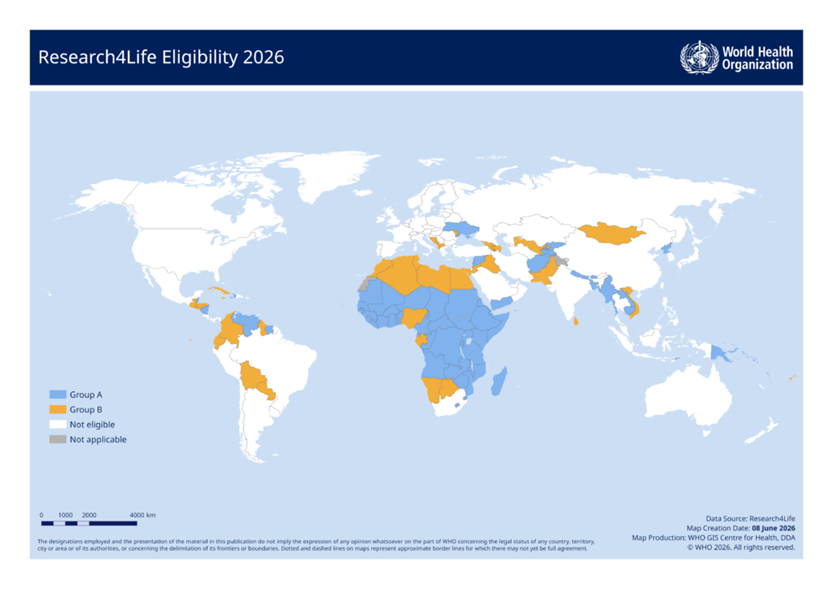
To support equitable participation in scholarly publishing, the journal offers APC waivers to authors from low- and middle-income countries. Eligibility is based on the corresponding author's institutional affiliation at the time of submission, following the Research4Life eligibility framework. Authors should request a waiver during the submission process.
|
Tier |
Waiver |
|
Group A |
Full waiver — up to 100% of the standard APC, for authors affiliated with Group A institutions. |
|
Group B |
Partial waiver — up to 50% of the standard APC, for authors affiliated with Group B institutions. |
Important: waiver requests from countries outside these two tiers generally can't be considered. Eligibility is based solely on the corresponding author's listed institutional affiliation — not their nationality or place of residence.
Withdrawal policy
Before preliminary review
Withdrawal is free of penalty at this stage. Before editorial screening begins, participation is entirely voluntary, and authors may withdraw their submission at any point without charge or sanction.
After preliminary review has begun
Once a manuscript enters peer review, withdrawal is no longer free. Given the time and resources already invested by editors, reviewers, and the publisher, authors who withdraw after this point are subject to a withdrawal fee equal to the full standard APC (€ 2375, valid from December 15, 2023) per manuscript.
Eligible countries
Country list
The countries eligible for APC waivers under the Research4Life framework are listed below. Eligibility is based on the corresponding author's institutional affiliation.
Group A — Full Waiver Eligible (up to 100%)
|
Afghanistan |
Mali |
|
Angola |
Marshall Islands |
|
Bangladesh |
Mauritania |
|
Belize |
Micronesia (Fed. States) |
|
Benin |
Mozambique |
|
Bhutan |
Myanmar |
|
Burkina Faso |
Nauru |
|
Burundi |
Nepal |
|
Cabo Verde |
Nicaragua |
|
Cambodia |
Niger |
|
Cameroon |
Niue |
|
Central African Republic |
Occupied Palestinian Territory |
|
Chad |
Palau |
|
Comoros |
Papua New Guinea |
|
Congo |
Rwanda |
|
Cook Islands |
Saint Helena |
|
Côte d'Ivoire |
Saint Lucia |
|
Dem. People's Rep. of Korea |
Saint Vincent & the Grenadines |
|
Dem. Republic of the Congo |
Samoa |
|
Djibouti |
São Tomé and Príncipe |
|
Dominica |
Senegal |
|
Equatorial Guinea |
Solomon Islands |
|
Eritrea |
Somalia |
|
Eswatini |
South Sudan |
|
Ethiopia |
Sudan |
|
Gambia |
Suriname |
|
Ghana |
Syrian Arab Republic |
|
Grenada |
Tajikistan |
|
Guinea |
Timor-Leste |
|
Guinea-Bissau |
Togo |
|
Haiti |
Tokelau |
|
Kenya |
Tonga |
|
Kiribati |
Tuvalu |
|
Kyrgyzstan |
Uganda |
|
Lao PDR |
Ukraine |
|
Lebanon |
United Republic of Tanzania |
|
Lesotho |
Vanuatu |
|
Liberia |
Venezuela (Bolivarian Republic of) |
|
Madagascar |
Yemen |
|
Malawi |
Zambia |
|
Sierra Leone |
Zimbabwe |
Group B — Partial Waiver Eligible (up to 50%)
|
Albania |
Jordan |
|
Algeria |
Kosovo |
|
Antigua and Barbuda |
Libya |
|
Armenia |
Maldives |
|
Azerbaijan |
Mauritius |
|
Bolivia |
Mongolia |
|
Bosnia and Herzegovina |
Montenegro |
|
Botswana |
Morocco |
|
Colombia |
Namibia |
|
Cuba |
Nigeria |
|
Ecuador |
North Macedonia |
|
Egypt |
Pakistan |
|
El Salvador |
Paraguay |
|
Fiji |
Republic of Moldova |
|
Gabon |
Saint Kitts and Nevis |
|
Georgia |
Seychelles |
|
Guatemala |
Sri Lanka |
|
Guyana |
Tunisia |
|
Honduras |
Uzbekistan |
|
Iraq |
Venezuela |
|
Jamaica |
Viet Nam |
 This work is licensed under a Creative Commons Attribution 4.0 International License.